The History of our Hotel
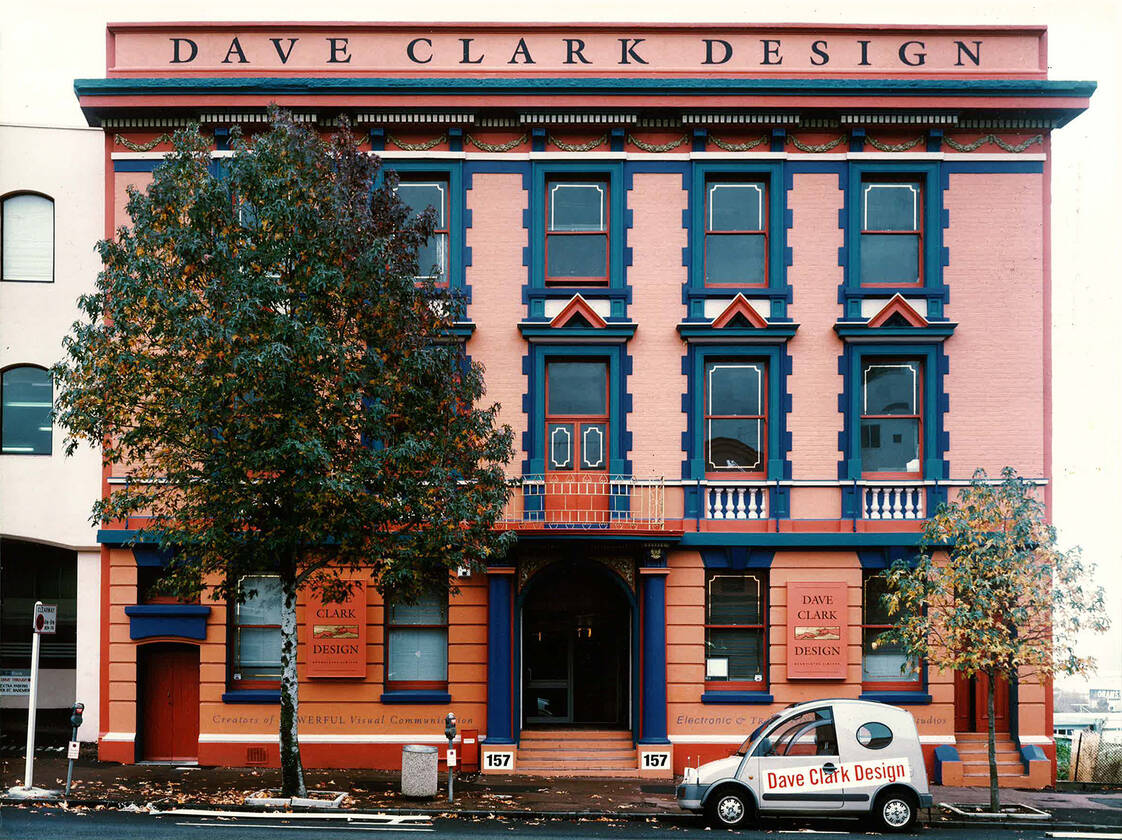
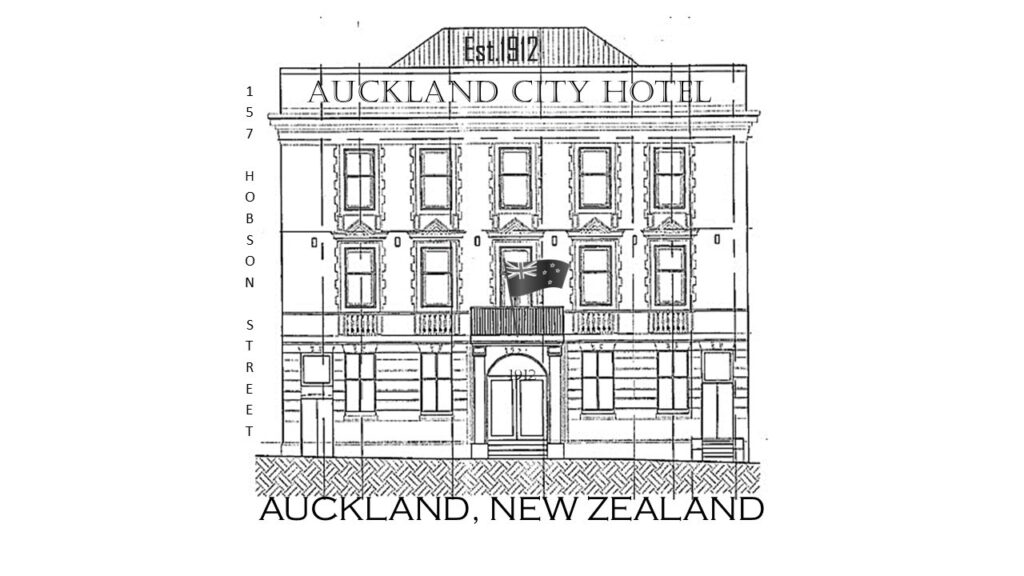
157 Hobson Street, Auckland — Built 1912
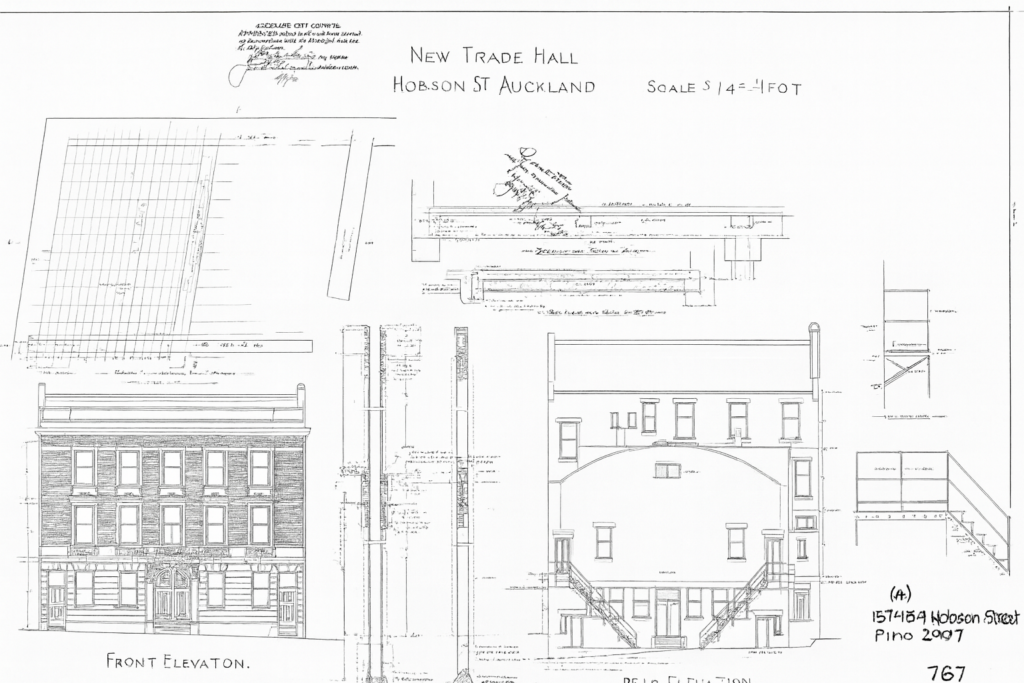
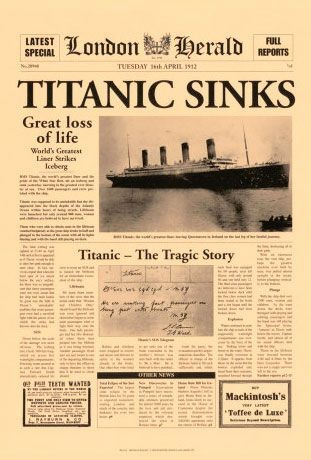
This building was constructed in 1912 as the headquarters of the Auckland Trades Council, the umbrella body representing trade unions across the city. Its completion coincided with a pivotal year globally — the same year the RMS Titanic was launched — marking a period of rapid industrial growth and social change.
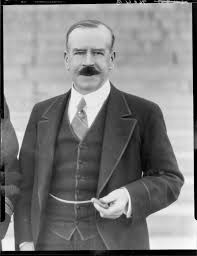
The building was officially opened by Sir Joseph Ward, Prime Minister of New Zealand, reflecting the importance of organised labour in the nation’s political and economic life at the time. Purpose-built, it contained offices, meeting rooms, and assembly halls for unions representing workers in construction, transport, hospitality, printing, manufacturing, and maritime industries.
1913 – The Great Strike
Only one year after opening, Trades Hall became a key coordination centre during the 1913 Great Strike, one of New Zealand’s largest industrial disputes. Union leaders met here to organise actions and negotiations during a period of nationwide labour unrest.
1920s–1950s – Community and Organisation
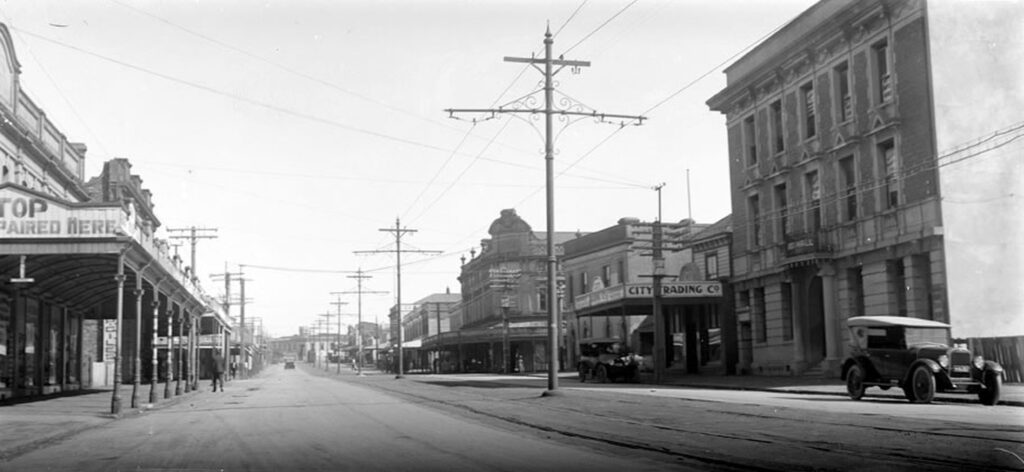
Throughout the interwar and post-war decades, the building remained the principal meeting place for Auckland’s unions. It was used not only for industrial organisation but also for education programmes, political meetings, and social events supporting the wider working community.
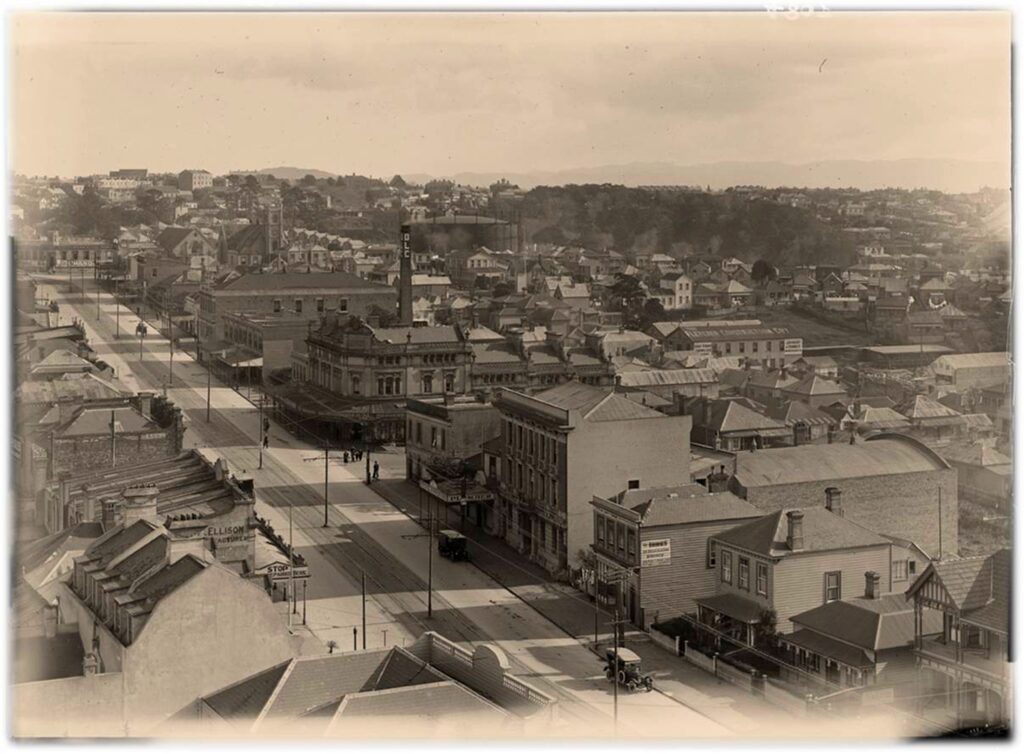
Ach heritage
Late 1950s – Concert and Dance Hall
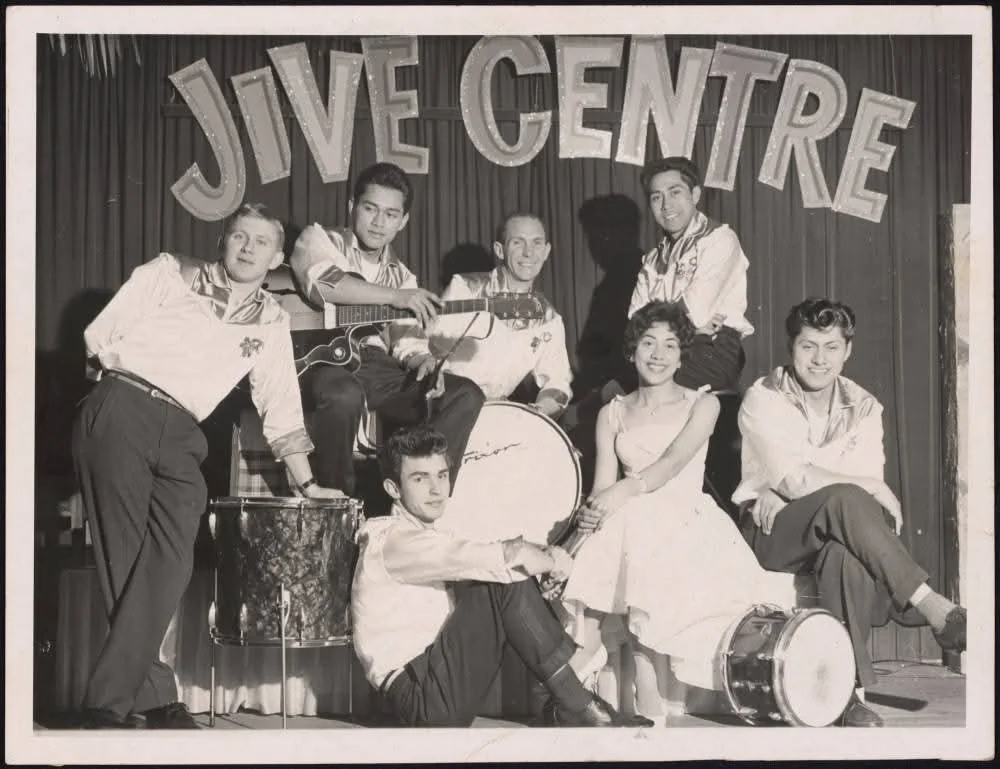
In the late 1950s, the building was also used as a concert and dance venue, known as the Jive Centre. It became a popular entertainment space for young Aucklanders and hosted early rock’n’roll performances, including appearances by New Zealand music pioneer Johnny Devlin around 1958, marking an important chapter in the city’s cultural history.
1951 – Waterfront Dispute
During the 1951 waterfront dispute, the longest and most significant industrial conflict in New Zealand history, Trades Hall again served as a major gathering point for union leadership and supporters.
1970s – Change of Use
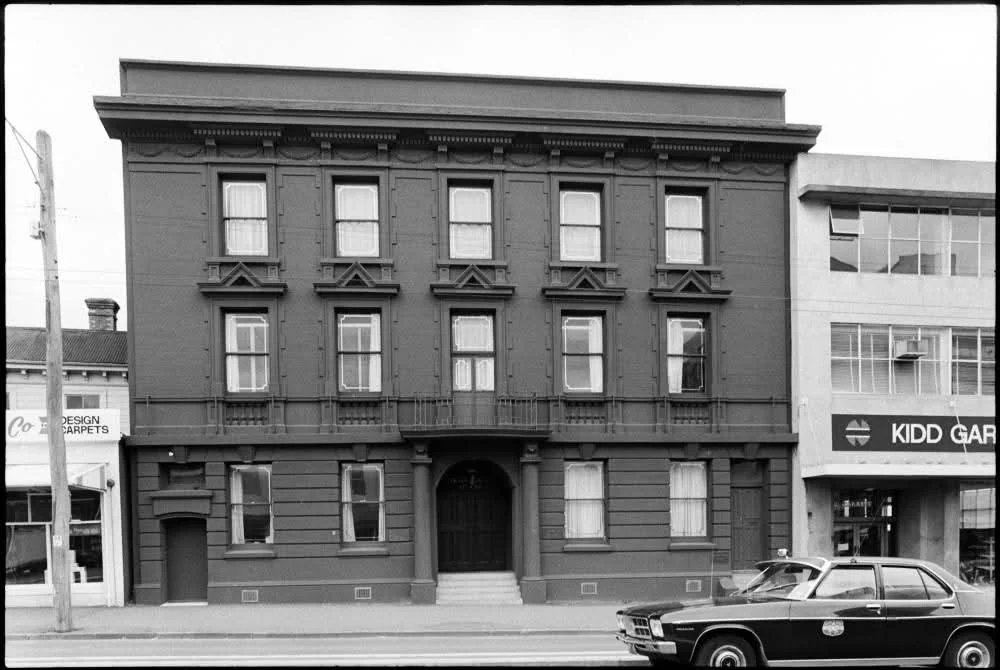
In 1972, the Auckland Trades Council relocated to larger premises, and the building was sold and adapted for commercial and office use. Despite internal alterations, the original façade and structural form were retained.
1986 – All Blacks Silver Fern Logo Connection
In 1986, the iconic All Blacks silver fern logo — the officially trademarked emblem of New Zealand’s national rugby union team — was created by designer Dave Clark as part of a move to unify and protect the All Blacks brand. Clark, a prominent New Zealand graphic designer, is credited with this version of the silver fern that remains central to the team’s identity today. His design work, which has become recognised internationally, stands as a notable creative achievement from the same era as Auckland’s evolving cultural and commercial sectors.

2008 – Establishment of Auckland City Hotel
In 2008, the restored Trades Hall building became part of the newly established Auckland City Hotel, marking its transition into hospitality use. The redevelopment carefully integrated the historic structure into a modern hotel while preserving its heritage exterior and architectural character. Since opening, Auckland City Hotel has grown into one of central Auckland’s major accommodation providers, serving international visitors, business travellers, and local guests while continuing the building’s long tradition as a place of gathering and service to the community.
Present Day
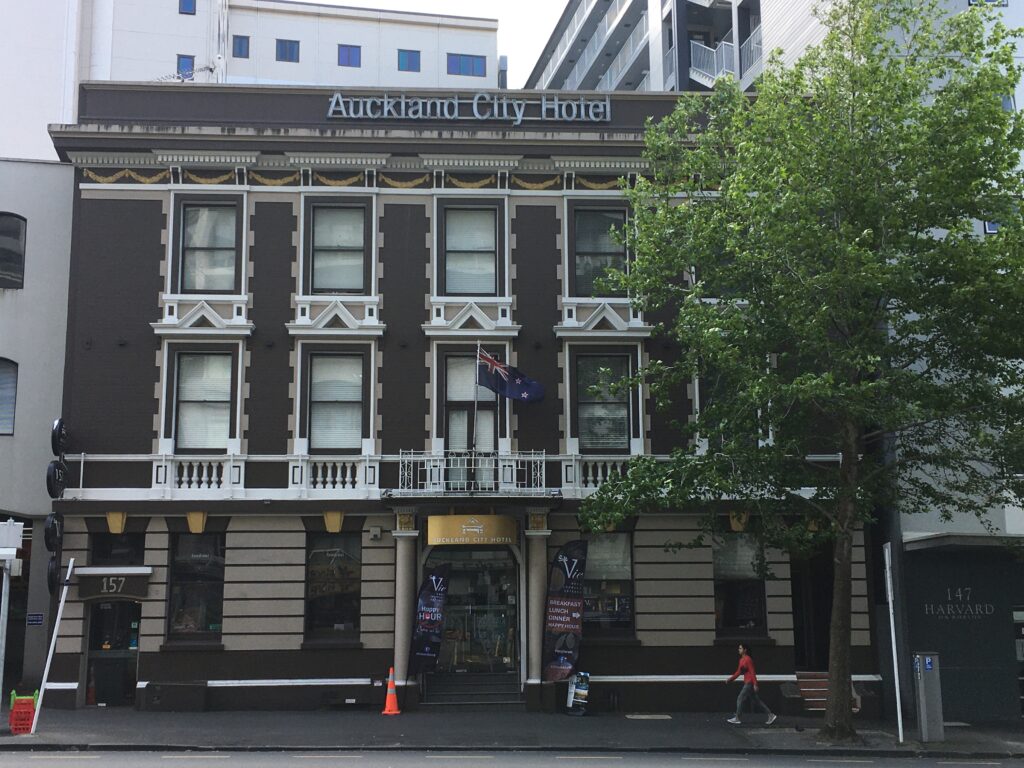
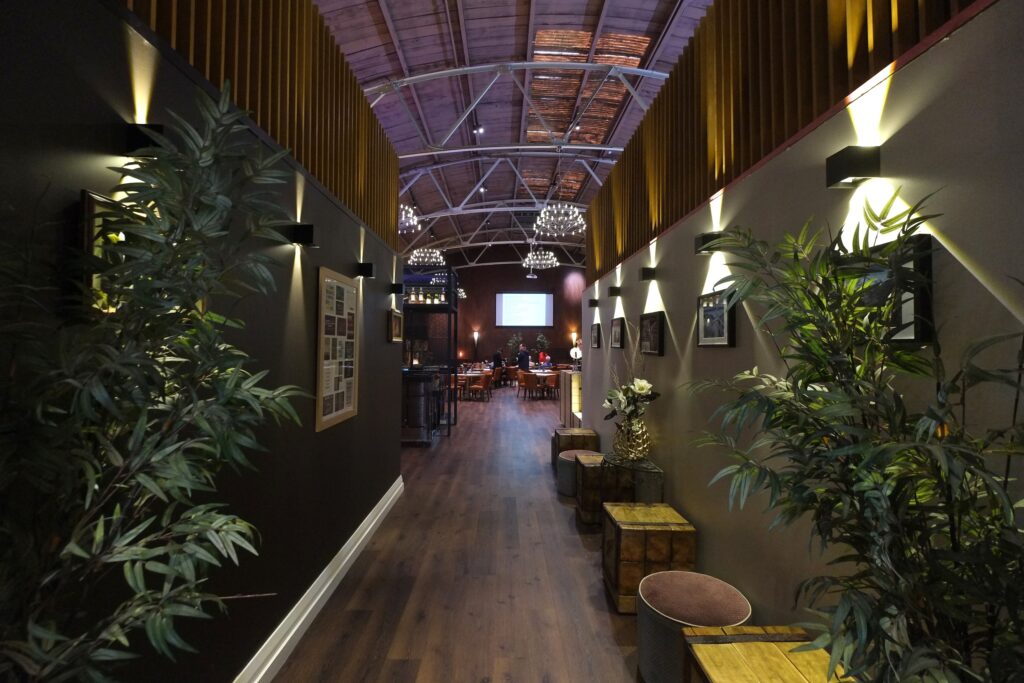
Today, the former Trades Hall stands as a meticulously protected heritage structure and represents one of the increasingly rare surviving examples of early 20th-century labour movement architecture remaining in Auckland’s urban landscape. This historically significant building now forms a key and integral part of the Auckland City Hotel on Hobson Street, where it has been thoughtfully incorporated into the hotel’s overall design and operational framework. Its original façade and distinctive architectural character have been carefully and deliberately preserved through sensitive restoration work, with particular attention paid to maintaining historical authenticity within spaces such as Vie Restaurant. This acclaimed dining establishment continues to reflect and showcase the building’s historic fabric, original craftsmanship, and architectural details while simultaneously serving contemporary guests in a modern hospitality context. Together, these carefully curated spaces—from the preserved exterior to the thoughtfully adapted interior venues—ensure that the building’s rich legacy and cultural significance remain not only visible to passersby and visitors but also actively experienced and appreciated in daily use by both hotel guests and restaurant patrons, creating a living connection between Auckland’s labour history and its present-day urban life.